
Book Review: Quilting Modern
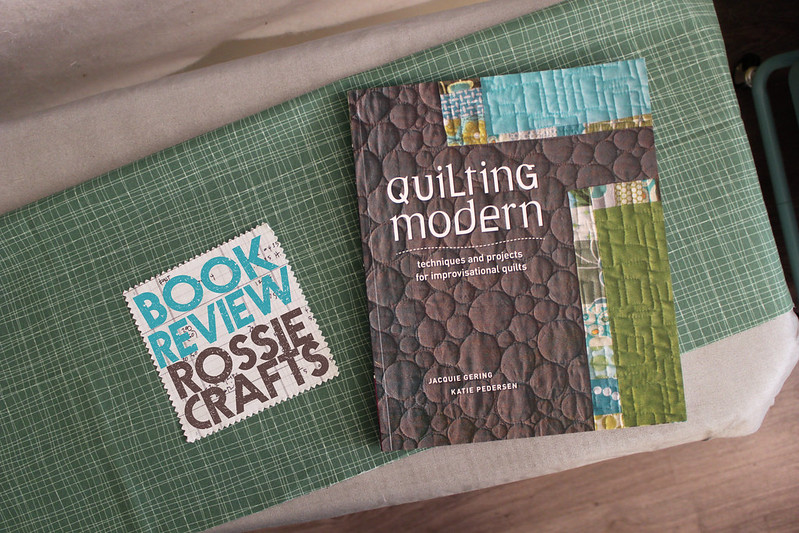
Today's review is of Quilting Modern: Techniques and Projects for Improvisational Quilters
by Jacquie Gering and Katie Pederson
What it is:
A review of seven techniques used by improvisational quilters, showing several quilts using each technique.
Basic breakdown of the book’s contents:
(1)
Introduction and basics
- Introduction (1 page) (less than 1%) This page provides a brief definition of improvisation and some mottos for the improvisational quilter.
- Tools and Materials (6 pages)(4%) This set of pages provides an extensive list of the tools for “the modern quilter.”
- Piecing Basics (6 pages)(4%) These pages explain ¼-inch seams, chain piecing, truing-up fabric and more.
- Color Theory (6 pages)(4%) These pages lay out some basics of color theory and suggest three basic color schemes (monochromatic, complementary, and analogous).
- Finishing your Quilt or pillow (12 pages)(8%) These pages explain how to back, quilt, and bind your blankets as well as how to finish quilted pillow projects.
(2)
The techniques and the quilts
Techniques and quilt patterns (126 pages)(80%)
This is the bulk of the book. It is arranged into seven sections. The lovely introductions to each of the techniques really stand out, “Let instinct, intuition, and possibility be your guide. Release perfectionism and trust your ideas.”
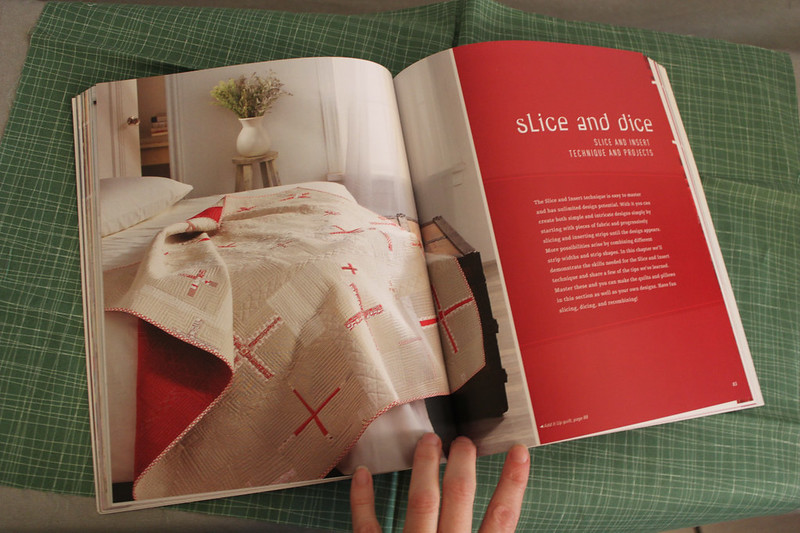
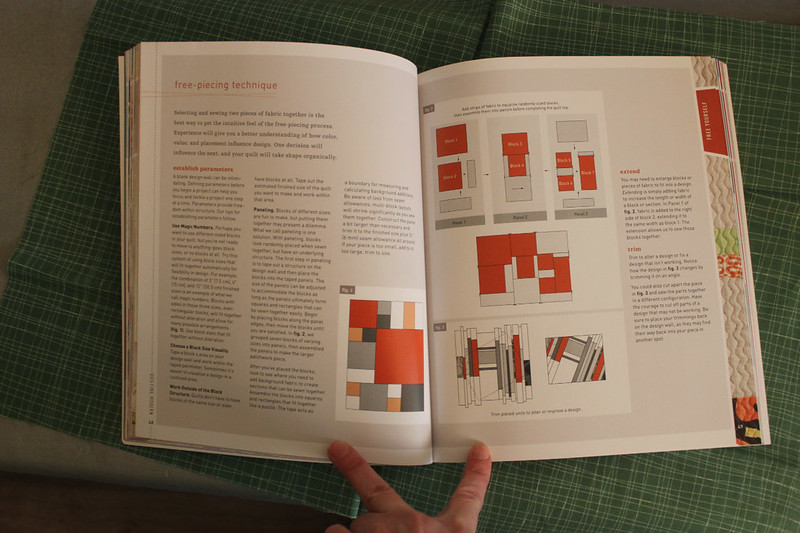
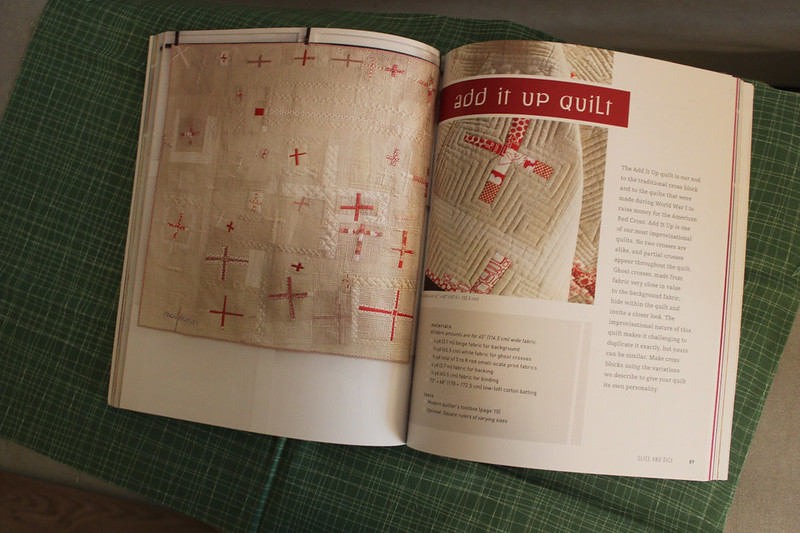
Each section begins with a stylized picture of a quilt constructed using the improvisational technique. This is followed by a two-to-five page explanation of the improvisational technique. The techniques covered in the book are free-piecing, log cabins, inserting strips into blocks, adding corners to blocks, strip-piecing, crazy piecing, and curved piecing. The explanations are clear and have computer-illustrated diagrams for each step.
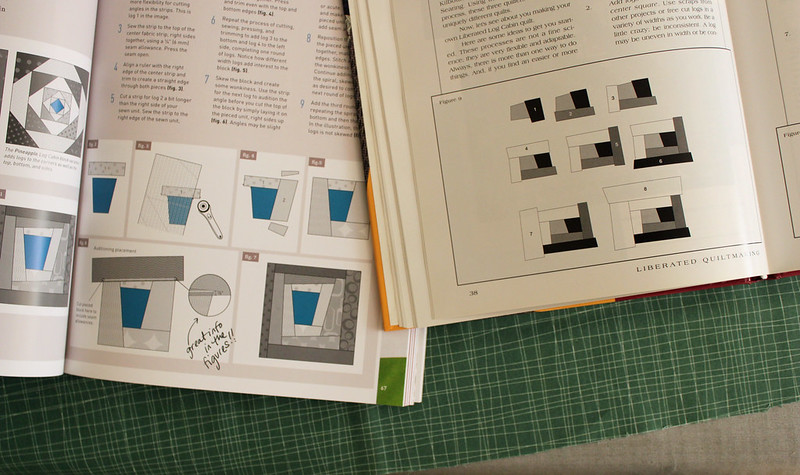
However, sometimes the diagrams and the text are a bit at odds. The photograph below, you’ll see that the text says to “Place piece B on piece A, right sides together, aligning the newly cut edges (fig 6.). ” However, in order to save as much fabric as possible, the instructions should read to place B on A and then slide B down, such that the top edge of B crosses the top edge of A ¼-inch from the edge that will be sewn. This is what is depicted in the diagram; its not clear to me why the writing doesn’t describe this adjustment, which saves both labor and fabric.
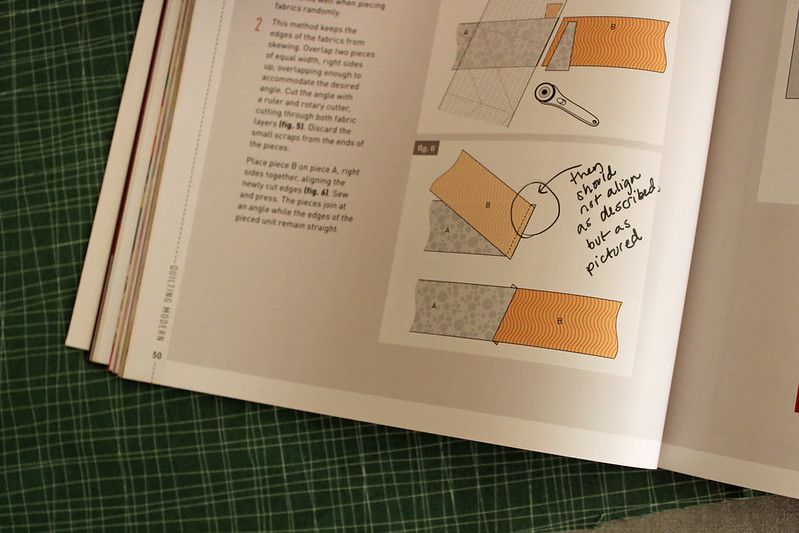
{and yes, I write in my books!}
Overall, I think the instructions are excellent, but readers should note that there may be places where the diagrams show a better technique than what has been described in the text.
Following each explanation of an improvisational technique, the authors show three quilts that were pieced using that technique with full explanations of how that particular quilt could be recreated. These include full-on shots of each quilt an excellent tips on how to use a design wall to help visualize a design.
What it is not:
(1)
My single greatest disappointment with this book is that it fails to communicate anything about the long history of improvisational quilting. Even the “recommended reading” section at the back fails to point readers to books in this vein.
This is particularly disheartening when it comes to the work of Gwen Marston, whose 1996 book Liberated Quiltmaking contains all but one of the techniques covered by Gering and Pederson (and the seventh is covered in one of Marston's later books). In the pictures below, I have placed Liberated Quiltmaking and Quilting Modern side by side to demonstrate the parallels.
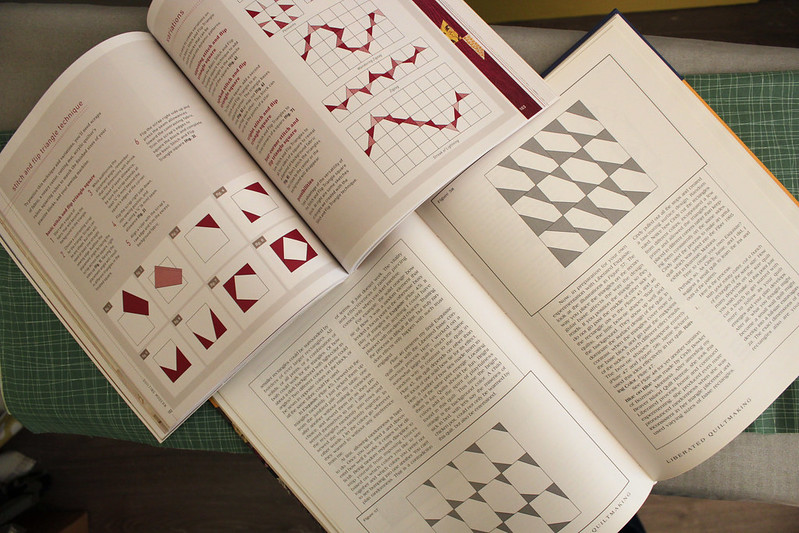
Marston, it is worth noting, begins her book by discussing the history she is working within, discussing at length the utility quilts made by African Americans (think Gee’s Bend), and providing a list of quilt books about those quilts. It saddens me that this tradition of tipping one’s hat to their predecessors wasn't upheld.
(2)

Gering and Pederson's recommend a scant-1/4 inch seam when piecing. I think this is a good starting place for quilters who are new to improvisational piecing and want a basic rule of thumb, but six of the seven techniques in the book require only a straight, strong seam, so I was surprised to see a full page dedicated to achieving and checking for a scant-1/4 inch seam. This fussy, controlled approach seems at odds with the fun and free approach advocated in the book.
Similarly, I'm not sure that one needs to square-up fabric before rotary cutting when that fabric is just going to be cut at odd angles and pieced with bias-cut and wonky-cut scraps a few minutes later. The space used to discuss squaring up could have benefited from a more general discussion of the importance of avoiding stretching and distortion and various ways to achieve this (starching, pinning, careful handling, gentle pressing).
(3)
Given that the book is titled "Quilting Modern," I think it is also worth mentioning that the authors do not discuss what imbues their quilts with a modern aesthetic or provide any general rules about how that look might be gernerated. They do define improvisation and explain how to follow that path, so perhaps they equate improvisation with modern quilting (though somehow I doubt that).
I love the look of so many of these quilts and wish they had provided more insight into their decision-making with specific quilts.
Who is it for?
This book is an excellent resource for quilters who have been following patterns and are interested in branching out into improvisational piecing. The tone is very encouraging and the instructions are clear.
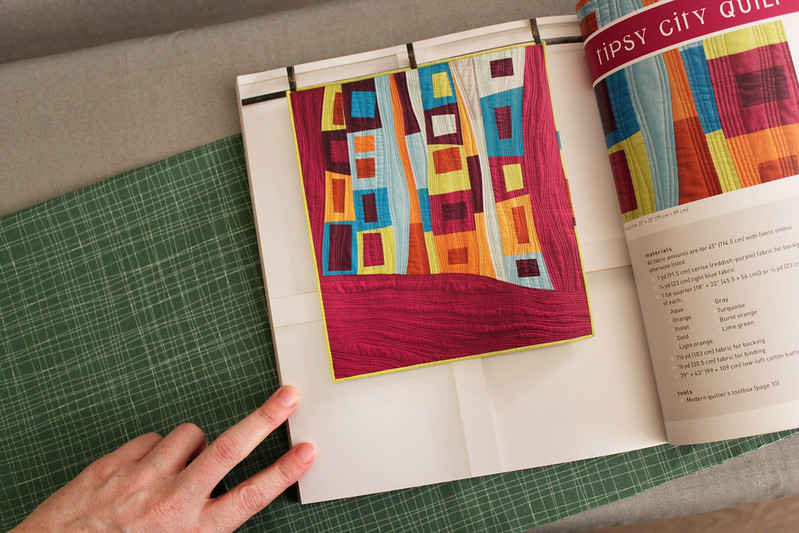
Gering and Pederson have well-developed voices, so simply looking at the images of the 21 quilts may be worth the price of the book for quilting enthusiasts.
The quilts are lovely and have a more modern aesthetic that Marston's, and so any quilter who can't see the modern possibilities in Marston's processes, might benefit from the addition of Quilting Modern to their library.
Quilting Modern: Techniques and Projects for Improvisational Quilters
by Jacquie Gering and Katie Pederson
is full color throughout, printed on high-quality paper, and 175 pages long.
Publication date: April 2012
Rossie Crafts review date: February 11, 2013
The list price is $26.95, it’s selling for $17.79 today.
I purchased this book with my own money; I am not paid to review books; if you click through to Amazon and then make a purchase, I will receive a small kickback from Amazon.